
CONGRESSIONAL SCHOOL BLOG
The Importance of Reading in Early Childhood and Beyond
By Maura Rice, Junior Kindergarten Teacher

Reading is the key to life. I vividly remember my father saying that to me as a child. I recall he said it would open up doors, literally and figuratively, in my life. That has always stuck with me, and as someone who LOVES reading and spends much of my day reading to children and discussing different elements of stories and books, I know it to be true! Having access to information through print is an essential part of life and a skill all children will need.
What are some of the benefits of reading?
Reading is crucial; it encourages imagination, creativity, and expands our understanding of the world. However, reading doesn’t just mean reading to oneself. Especially in early childhood, it is so incredibly important to read TO our children. Why is that?
- Reading to children promotes their language development and love of language from birth. Babies can pick up on rhythm, cadence, and tone. They learn the sounds of their caregivers' voices and can hear if we say something in a sing-song tone, loudly, or quietly. These very early days of reading to a baby have a significant impact on their brain and language development skills. They begin to hear patterns in speech. Remember that language is developing its roots in your baby’s brain before they can ever talk or even lift their head on their own!
- As babies grow and their eyesight develops more, they can see pictures and objects in front of them. As we read to them more and point out objects, those objects become familiar. They are storing these sounds and pictures in their ever-expanding memory, which is already helping them develop the skills they need to communicate with others.

- As toddlers and young children grow, their vocabulary begins to expand. When we read to them, they are busy processing information, connecting sounds to objects on the page, and reinforcing their knowledge. Toddlers might often ask you to read the same book repeatedly. This is actually a very GOOD thing, and it's something they do because they crave predictability, using it to help them process information more concretely.
- As children reach preschool age, reading remains essential. It continues to be a tool to help us teach children social skills, such as handling difficult emotions or challenging feelings. It can also help foster a passion for a certain subject for your child. How many children learn to name dinosaurs and can recite hundreds of amazing dinosaur facts, just because they were read to about a topic they loved? Find something that resonates with your child and brings them joy. It will also introduce them to new vocabulary and language skills, fostering a deeper connection to reading.
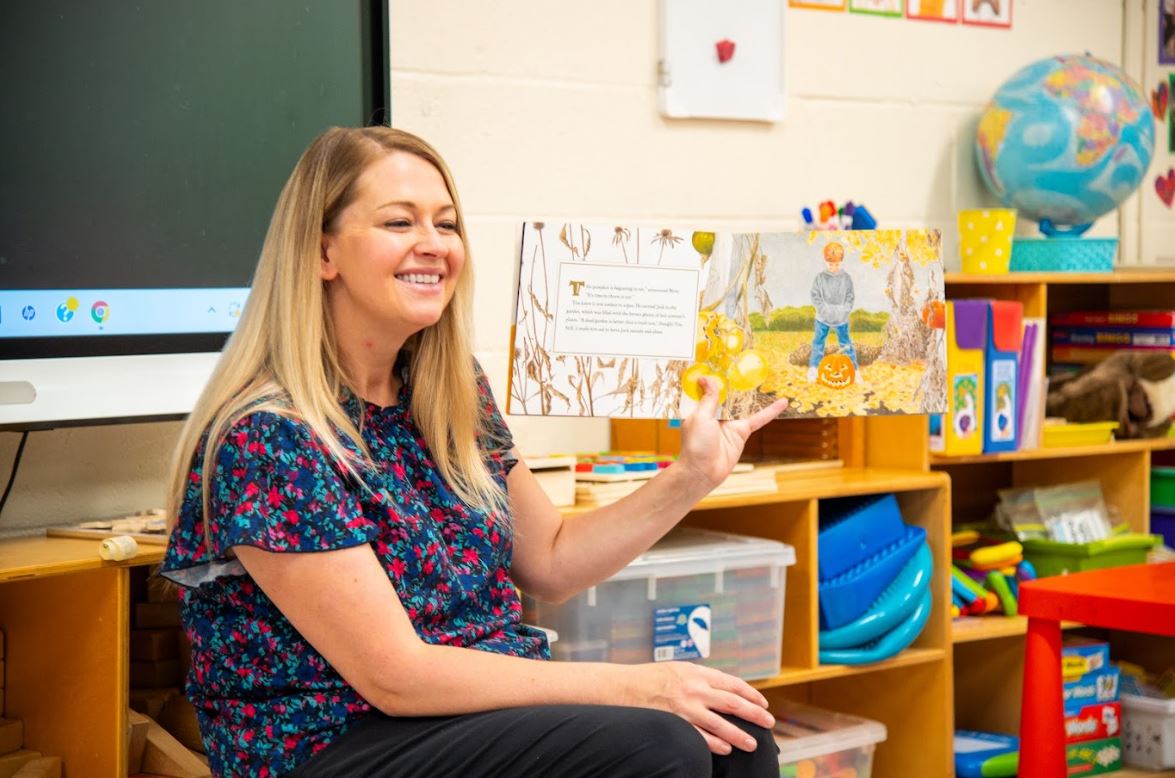
What can we do to foster a love of reading and books in our children?
- Read aloud as often as you can, even when you think your kids have outgrown it or can read on their own.
- Let your children see you reading. A novel, a magazine, a newspaper, or listening to an audiobook.
- As adults, it can be easy to forget what we needed when we were younger. We often take our language and reading skills for granted because they are now second nature to us. However, remember that children are just starting out on their journey, and as amazing and brilliant as they all are, they still need our help!
- Words follow a left-to-right progression. Use your finger as you read and trace from left to right. Stop at a period and tap with your finger to indicate a stop. Use big gestures when reading a sentence with an exclamation point. Gestures also help expand a child’s vocabulary (look at the giraffe! He is so TALL! Raise your hands up super high to show what tall means).
Reading aloud to young children is a foundational activity that can boost self-esteem, spark their inquisitiveness, and build critical thinking skills, setting them up for success in the educational challenges that lie ahead. Motivating children to be independent readers can be fostered through a love of reading at an early age, and it is never too early to begin!

Share this post with your friends: